As a mom of kids with severe food allergies, I know how overwhelming air travel can feel. It’s easy to get so stressed thinking about how you will keep a child safe in an environment you can’t fully control. Airplanes are shared spaces with unknown cleaning standards, limited food transparency, and hundreds of other passengers making their own choices.
Early on, I found that trying to manage everything around us only increased stress. Watching what other people were eating, worrying about announcements, and hoping airline policies would be followed left too much up to chance.
I’ve come to realize that what matters most is focusing on what we can actually control when it comes to flying. Our food. Our space. Our preparation. I have strict, non-negotiable things we do every time we fly. They may seem overly cautious to some, but it is what works for our family.
The tips below are what has worked for us over repeated flights to keep my food allergy kids safe and comfortable. A quick note for context. My children’s allergies are not airborne, which shapes how we approach flying.
What You Can Control When Flying, and What You Can’t
Unfortunately, external accommodations are inconsistent. We’ve learned that sometimes airlines make announcements. Sometimes they don’t. Sometimes people comply with requests to not eat certain foods. Sometimes they don’t.
By shifting our focus inward, we’ve shifted the importance away from those things that we can’t control. We bring only safe foods. Everyone in our travel party follows the same rules. We clean our entire seating area thoroughly. We assume shared surfaces are contaminated and plan accordingly.
This approach does not require cooperation from anyone else on the plane. It allows us to settle in, relax, and focus on getting where we are going rather than monitoring the behavior of others.
Everything below is built around that approach.
1. Set Clear Food Rules for the Plane
Only bring foods that have already been eaten safely at home. Air travel is not the time to try a new snack, bar, or packaged food, even if the ingredients appear safe.
Everyone in your travel party should follow the same food rules during the flight. This eliminates the need to track hand washing, cross contact, or who touched what. It simplifies everything.
Bring enough food to cover all meals and snacks for the entire flight, including delays. We never eat airplane food. Even when an allergen-free option is offered, there are too many variables outside your control.
Your food is predictable. That predictability matters.
2. EpiPens
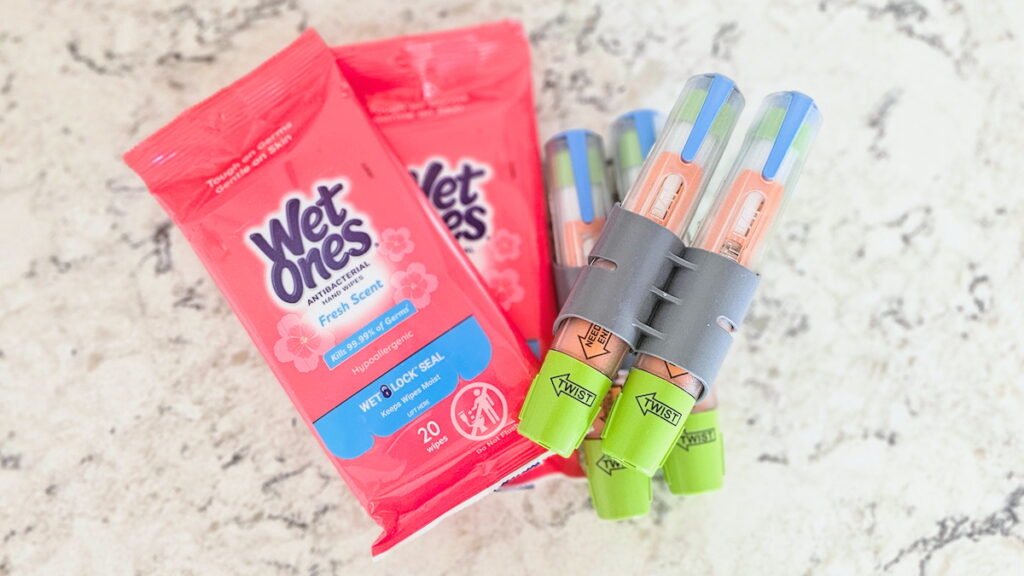
All epinephrine you bring on the trip should be in your carry on. Airport security allows it without issue. Keeping all medications together in a clear zip top bag makes the process smoother and easier to manage. Here is the TSA page which has a detailed list medically necessary items, including EpiPens allowed through security.
When going through security, just pull the bag out and place it in the bin. I remember being worried about this the first time we traveled with EpiPens, and it turned out to be no big deal.
For reference, two of our kids have food allergies, and we always bring more than one set for each child. My husband and I each carry a set so that we both have access during the trip. That means we typically go through security with at least two sets of EpiPen Juniors and two sets of regular EpiPens, eight injectors total, and we have never had a problem.
3. At the Gate
When I arrive at the gate, I always ask what snacks will be served on the plane and explain that I am asking because my children have food allergies. I consider any action that comes from this conversation a win, but the outcomes vary drastically, even within the same airline, so I don’t go in with high expectations.
Possible actions after this conversation include changing the snack that will be served, making a plane-wide announcement requesting passengers avoid certain foods, or asking people in your row and sometimes surrounding rows to refrain from eating certain foods.
Because we manage so many allergies, I know there is no realistic way to prevent all passengers from eating our allergens. Still, I figure that something is better than nothing.
4. Board Early and Wipe Down Everything
Pack plenty of wet wipes. You will use more than you expect during the cleaning process, so wipes that can be pulled quickly from a container are much easier to manage than individually wrapped packets. I prefer wipes that are also sanitizing. While killing germs does not help with food allergies, it’s nice when surfaces are truly clean.
Board early so you have time to wipe everything down. Even if you are not traveling with young children, needing extra time to clean your seating area due to food allergies is a legitimate reason to board early.
Once onboard, wipe everything. Seats, seat belts, arm rests, overhead buttons, window shade, tray table on both sides, and the seat back pocket. Do this for every seat in your party, not just the person with allergies. When everyone’s space is cleaned the same way, you remove the stress of tracking who touched what.
Pay special attention to the seat back pocket. It can collect crumbs and residue from previous flights. If it looks dirty inside, I don’t use it at all.
5. Managing Expectations About Other Passengers
With this approach, you know that your food and your immediate space are safe regardless of what the other passengers are eating.
While it can be reassuring when airlines make announcements or ask nearby passengers to avoid certain allergens, it is not something you can rely on. Even when announcements are made, you cannot control what people choose to do.
In our family, we manage peanut, tree nut, mustard, sesame, and dairy allergies. While we have frequently seen airlines acknowledge peanuts or tree nuts as allergens, we’ve never seen airlines address other allergens. Accepting this reality early allows you to focus on preparation rather than disappointment.
Quick Reference Checklist
- Bring only foods that have been eaten safely before
- Pack enough food for all meals and delays
- Have everyone in your party follow the same food rules
- Pack plenty of wet wipes
- Board early to clean thoroughly
- Wipe every surface for every seat
- Keep epinephrine in your carry on and easily accessible
Once we get to our destination, we always stay somewhere with a full kitchen so we can cook all of our meals. This post about managing food allergies and cooking in vacation rentals talks all about how we handle that process.
Related Posts
Fragrance Free Skincare Products We Use For Sensitive Skin
Gluten Free Favorites
How Our Family Stays Safe In Vacation Rentals With Food Allergies